The Complete Pokémon Card Collecting Guide
Where to start, how to buy without getting burned, and the habits that separate a collection from a shoebox of cards.
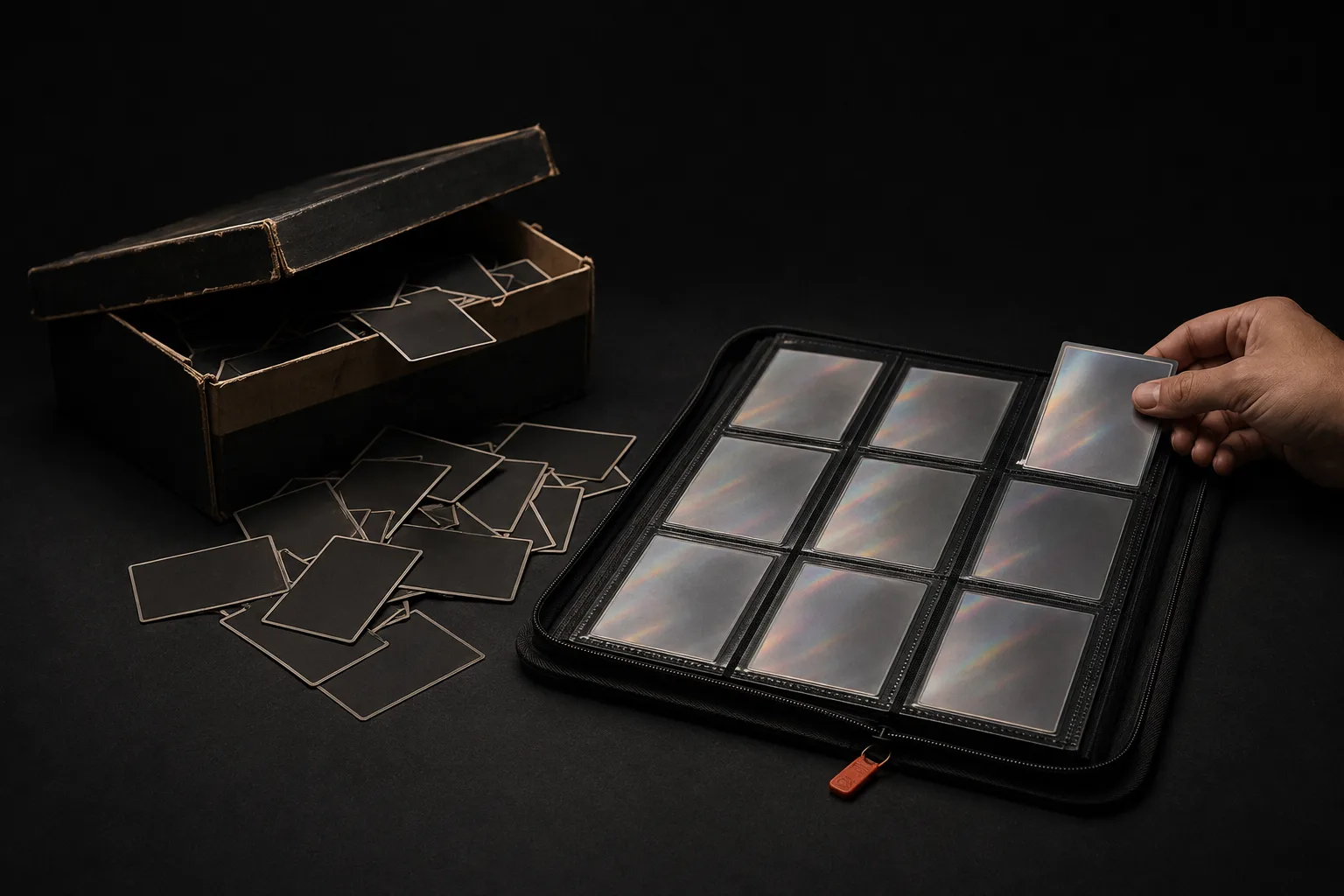
Start with what you love
Every lasting collection is built around something its owner actually cares about. A set from your childhood, one artist, one Pokémon, the Eeveelutions, the starters from every generation. Pick a lane before you spend serious money, because the alternative is chasing everything the hobby releases, and the hobby releases a lot.
A lane also makes you better, faster. Collect one era and you learn its print quirks, its fair prices and its fakes in a way no generalist does. You can widen later. Most collectors do.
Learn to read a card before you buy one
A Pokémon card tells you exactly what it is if you know where to look, and the same character can appear on a fifty-cent common and a four-figure alternate art. Four things identify a card:
- Set symbol and number: the small symbol and the number like 4/102 in the lower corner name the exact printing.
- Rarity mark: a circle is common, a diamond uncommon, a star rare. Holo, reverse holo and the modern ultra-rare tiers climb from there.
- Edition marks: on vintage cards, a 1st Edition stamp or a missing drop-shadow beside the art box changes the price entirely.
- Set codes: modern cards print a code beside the number, like MEW for the 151 set.
The sets guide walks era by era through what exists and what collectors chase in each. Ten minutes there saves you from the classic beginner mistake of paying a rare-card price for a common printing.
Buy singles, open packs for fun
Packs are a lottery ticket with worse odds than they feel. If there is a specific card you want, buy that card as a single. The money you would burn on packs chasing it almost always buys the card outright, sometimes graded. Open packs because opening packs is fun, and budget it as entertainment.
In Australia you can buy singles at local game stores, at card shows, on eBay, and on collector marketplaces like Grails. Wherever you buy, two rules hold. Check what the card actually sells for before paying, and learn the five checks for fakes before spending real money with a stranger.
Sealed product is its own game. Buy it from proper retailers rather than marketplace resellers, and treat loose vintage packs as gambling, because resealing is a well-established industry.
Condition decides most of the price
Two copies of one card can be ten dollars apart or a thousand dollars apart on condition alone. Learn the bands: Near Mint, Lightly Played, Moderately Played, Damaged. Whitening on the back edges, soft corners and surface scratches are what move a card down the scale, and most of that damage happens in the first weeks of careless handling rather than over the years.
So sleeve cards the day you get them, and handle anything valuable by the edges. When a card matters enough, third-party grading from PSA, Beckett or CGC turns your opinion of its condition into a number the whole market accepts. Whether that is worth the fee is covered in PSA grading in Australia.
Store them like they matter
Penny sleeves, top loaders and a decent binder are cheap compared to what carelessness costs. Australian humidity and summer heat are genuinely hostile to cardboard, so where the collection lives matters as much as what it lives in. The short version: sleeve everything, keep it cool and dark, and never store cards in a shed or a car.
Slabs need care too. Cases scratch, and sunlight fades the card inside regardless of the plastic. The full rundown, from double sleeving to silica gel, is in the storage guide.
Use the Australian scene
Collecting alone through a screen is the expensive way to learn. Card shows and collector markets run regularly around the capitals, most game stores host trade nights, and both are full of people happy to tell you what a card is worth and why. Watching two collectors negotiate teaches you more about real prices than an hour of reading listings.
The scene is also where trades happen, and trading moves a collection forward without new money. Value both sides from sold prices rather than sentiment before you shake hands.
Track it from the first card
Record every card as you buy it, with what you paid. This feels like admin until the day it feels like foresight. You will know what you own, what it cost and what it is worth now, and you will stop re-buying cards you forgot you had. If you ever sell, those purchase records also matter for tax.
Grails does this without the spreadsheet. Adding a card takes a photo, values on graded slabs keep themselves current from recent eBay sales, and your totals, profit and loss sit on one screen. Tracking is free, and the collection tracker guide covers moving an existing spreadsheet across.
How much money do I need to start collecting Pokémon cards?
Whatever you like. Plenty of collectors work in singles under ten dollars, and a defined lane matters far more than a big budget. Decide a monthly cap you can lose cheerfully and stay inside it.
Should I buy packs or single cards?
Singles, if you want particular cards. The odds of pulling a specific chase card from packs are brutal, and the pack money nearly always buys the card outright. Open packs for the fun of opening packs.
When should I get a card graded?
When the card is genuinely valuable, the copy is genuinely clean, and the graded price at the grade you honestly expect clears the fees with room to spare. Check sold prices at each grade first, then read the PSA grading guide.
Track your collection with Grails — free to start.
See all features