Card Grading, Integrated
What Grails does with a graded card: the cert on record, PSA’s page one tap away, and a value that keeps itself current.
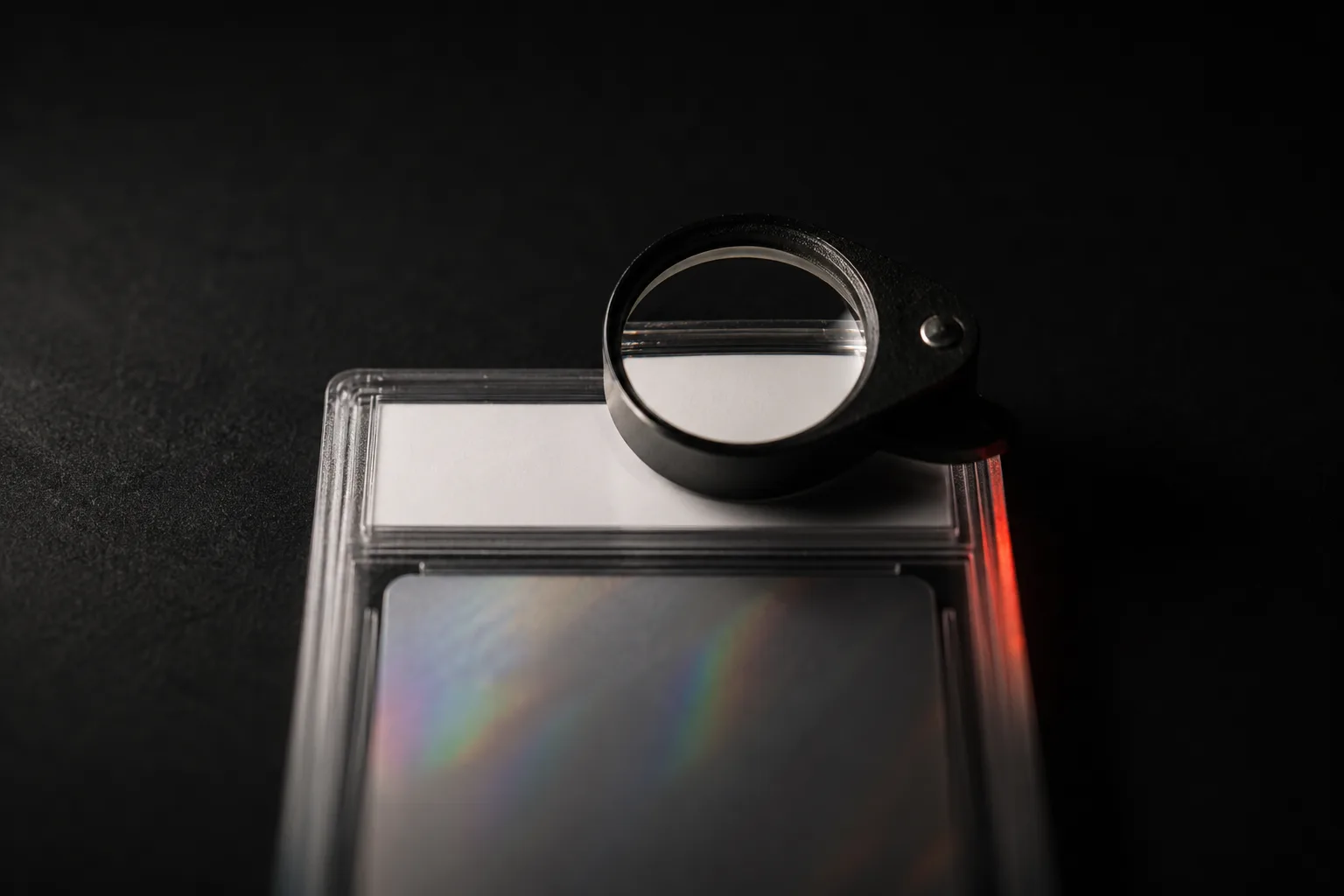
Every slab, on the record
A graded card carries three facts that matter: who graded it, what they gave it, and the certification number on the label. Grails stores all three on the card, alongside what you paid and when. PSA, Beckett and CGC slabs all fit, because the fields do not care whose label it is.
Adding one is quick. Photograph the slab and the details are read off the label for you to confirm, or type them in yourself. Either way the cert number stays attached to that card from then on.
PSA’s own page, one tap away
For PSA slabs, Grails builds a link straight to that cert’s page on PSA’s website. That page is the official record: card, set, year, grade, and in many cases PSA’s own scan of the slab. It is the same check a careful buyer runs before trusting any slab, so having it one tap away means your card can always show its papers.
A card with no decent photo can borrow that official scan, too. Open the PSA page, save the image, and use it on the card. Beckett publishes no per-cert page to link to, so for BGS slabs the cert stays on record and verification happens through Beckett’s own lookup form.
One thing Grails will not do is fill the details in from PSA automatically, because PSA closed its data service to outside apps and no tracker can. The honest version of this feature is a clean record on your side and PSA’s page one tap away, and that is what is built.
Slab values that keep themselves current
Graded cards are where automatic pricing genuinely works, because a slab is a precisely identified object. Grails updates slab values from recent eBay sold prices, matched on the cert number so the price lands on exactly the right card. Each slab builds a value history chart over time and shows how it moved today.
Raw cards stay manual, deliberately. A raw card’s value depends on condition judgements no database can make from a distance, so you set it, and update it when you check the market.
There is a population field for pop-report context as well. PSA publishes population counts free on its site, and low population at top grade is a large part of why two slabs of the same card can behave so differently.
What the record buys you
Sellers with clean records sell faster. A marketplace listing that names the grade and cert, with the PSA page a tap away for the buyer, answers the questions that stall deals between strangers. Grading fees also form part of your cost base when tax time comes, which is one more reason the numbers should live with the card instead of in your head.
The record follows the card out the door, too. When a slab sells, the sold history keeps the sale price, days held and profit beside what you paid, filed by financial year, and the Premium plan adds PDF invoices. That trail builds itself as you go, which is the only time it can be built.
If your slabs are still a column marked “graded” in a spreadsheet, the collection tracker guide covers bringing them across.
Does Grails fill in card details from PSA automatically?
No, and neither does any other app, because PSA closed its data service to third parties. Grails reads the label from your photo for you to confirm, keeps the cert on record, and links to PSA’s own page for verification.
Which grading companies does Grails support?
You can record any grader, with PSA, Beckett and CGC the common ones. PSA slabs also get a one-tap link to their official cert page. Beckett has no per-cert page to link to.
Where do graded card values come from?
From recent eBay sold prices, matched to the slab’s cert number, so each graded card builds a value history over time. Raw card values you set yourself.
Track your collection with Grails — free to start.
See all features